A practical Uganda-focused guide with 20 common interview questions, realistic sample answers for fresh graduates, and smart preparation tips for bank, NGO, and office interviews.

If you are preparing for a job interview in Uganda, the smartest thing you can do is practise real interview questions before the interview day. Many job seekers read generic advice, but employers are not looking for generic answers. They want clear communication, professional judgment, evidence of preparation, and signs that you can fit the role.
This guide covers 20 common interview questions in Uganda and shows you how to answer them from a fresh graduate perspective. That matters because many candidates applying for internships, entry-level jobs, graduate trainee roles, NGO jobs, bank jobs, customer service roles, and office jobs are not speaking from ten years of experience. They need answers that are honest, strategic, and realistic for where they are now.
Uganda’s labour market remains competitive. The UBOS Labour Market Survey Report 2025 reported 155,240 vacancies in surveyed establishments, while 43,900 remained unfilled. In one public recruitment example, Daily Monitor reported that 81,873 people applied for 277 government jobs and 43,123 shortlisted applicants had to sit aptitude tests before oral interviews. That is why interview preparation matters.
If you want the full preparation system around this article, also read How to Prepare for a Job Interview in Uganda, How to Apply for Jobs in Uganda, How to Write a CV in Uganda, and How to Write an Application Letter in Uganda.
What are the most common interview questions in Uganda?
The most common interview questions in Uganda include tell me about yourself, why do you want this job, what are your strengths and weaknesses, why should we hire you, where do you see yourself in five years, and scenario-based questions about teamwork, pressure, ethics, customers, and problem-solving.
How to Use This Guide
Do not memorize the sample answers word for word. Use them to understand structure, tone, and the kind of detail employers want. Your final answer should sound like you, not like a script from the internet. A strong interview answer is usually clear, relevant, and specific. It shows that you understand the question and can link your background to the employer’s needs.
For most questions, a good answer has three parts: a direct response, a short example, and a clear link back to the role. If you are a fresh graduate, your examples can come from university projects, leadership roles, volunteer work, internships, part-time work, field attachments, or practical life experience. Employers do not only assess what you have done. They also assess how you think, how you learn, and how you communicate.
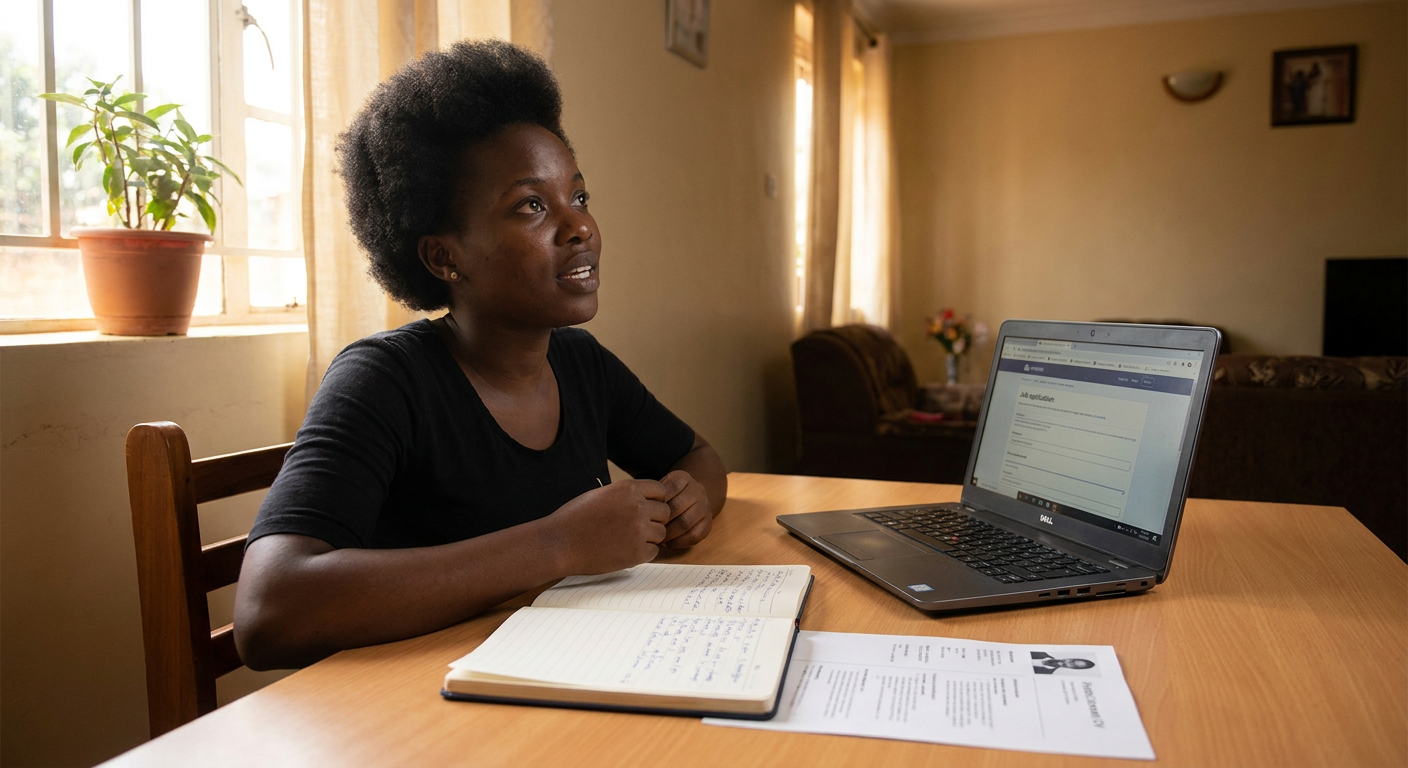
20 Common Interview Questions in Uganda and Sample Answers
The questions below match what many Ugandan job seekers face in entry-level, graduate trainee, customer service, office support, NGO, and banking interviews. Use the sample answers as structure, not as a script.
Behavioral Interview Questions
Behavioral questions help employers understand how you think, communicate, and act. They are common across private companies, NGOs, banks, schools, hospitals, telecoms, and graduate trainee programmes.
1. Tell me about yourself.
Direct answer: I recently completed my degree in Business Administration at Makerere University, where I built strong skills in communication, teamwork, and data handling. During school, I also led a student project and completed an internship that strengthened my customer service and reporting skills. I am now looking for an opportunity where I can grow, contribute, and apply those skills in a professional environment.
This answer works because it is short, relevant, and professional. It does not start with family history or primary school details. It focuses on education, useful experience, and current direction. For deeper preparation, see How to Answer Tell Me About Yourself in Uganda.
2. Why do you want this job?
Direct answer: I want this job because it matches both my training and the kind of work I enjoy. I am especially interested in roles where I can solve problems, support clients or teams, and keep learning. I also like that your organization is known for professionalism and impact, so I see this as a place where I can grow while contributing meaningfully.
Employers want to hear motivation, not desperation. Avoid saying you just need money or that you will take any job. Show that you understand the role and have thought about why it fits you.
3. What are your strengths?
Direct answer: One of my main strengths is being dependable with deadlines. At university and during internship, I learned to plan my work, communicate early when something needed clarification, and deliver tasks on time. I am also a quick learner, which helps me adjust fast when I am introduced to new systems or responsibilities.
Choose strengths that connect to the job. Strong answers usually mix a skill with proof. Saying you are hardworking is not enough unless you show what that looked like in a real situation.
4. What is your greatest weakness?
Direct answer: Earlier, I used to spend too much time trying to perfect tasks before sharing them. I realized that in a work environment, feedback matters more than silent perfection. I have improved by setting internal deadlines, asking for feedback earlier, and focusing on progress without lowering quality.
A good weakness answer shows self-awareness and improvement. Do not claim you have no weakness. Do not mention a weakness that directly destroys your fit for the role unless you can show strong improvement.
5. Why should we hire you?
Direct answer: You should hire me because I bring a combination of willingness to learn, strong work ethic, and practical skills relevant to this role. I may be early in my career, but I am organized, coachable, and serious about performance. In my previous internship and academic projects, I consistently showed that I can take responsibility, work with others, and follow through.
This question is your chance to summarize your value. Keep it focused on the employer’s needs, not on praise about yourself alone.
6. Describe a time you worked in a team.
Direct answer: In my final-year group project, our team had different working styles and we were falling behind schedule. I suggested we divide tasks by strength, set mini-deadlines, and review progress twice a week. That improved coordination, reduced confusion, and helped us complete the project on time. It taught me that teamwork works best when communication is clear and roles are defined.
Use the STAR method here: situation, task, action, result. Employers want evidence that you can contribute in a shared environment.
7. Tell us about a challenge you faced and how you handled it.
Direct answer: During internship, I once received incomplete information for a report that had to be submitted quickly. Instead of waiting passively, I contacted the relevant staff, clarified the missing points, and reorganized the available data so I could keep moving. I submitted the report on time and learned the importance of initiative and calm problem-solving.
Strong challenge answers do not just describe the problem. They show action, judgment, and learning.
8. Where do you see yourself in five years?
Direct answer: In five years, I see myself having built strong professional experience in this field, with deeper technical skills and greater responsibility. I want to be known as someone reliable, professional, and results-driven. I also hope to continue learning through practical experience and further training so I can contribute at a higher level.
This answer balances ambition with realism. Avoid answers that sound vague or disconnected from the role you are applying for.
Technical and Job-Fit Questions
These questions test whether you understand the actual work, not just the interview process. Even fresh graduates can answer them well by linking coursework, internships, projects, and observation.
9. What do you know about our company or organization?
Direct answer: From my research, I understand that your organization focuses on delivering reliable services to clients while maintaining a strong professional reputation in the market. I noticed that your work emphasizes values such as accountability, service quality, and consistency, which are values I also respect in a workplace. That is one reason the role stood out to me.
This question rewards preparation. Before interview day, review the company website, social media pages, recent news, services, products, and mission. Only mention employer-specific facts you have actually verified. If you have not confirmed recent growth, partnerships, or awards, do not claim them.
10. What relevant skills do you bring to this role?
Direct answer: I bring strong communication skills, attention to detail, basic reporting ability, and confidence using common office tools such as Word, Excel, email, and online systems. Through internship and school projects, I also developed teamwork, time management, and problem-solving skills, which I believe are important for this role.
Do not list random skills. Select the ones that matter most for the vacancy and connect them to specific experience.
11. How do you handle pressure and deadlines?
Direct answer: I handle pressure by breaking work into priorities, managing my time carefully, and communicating early if I need clarification. In school and during internship, I learned that panic wastes time, but structure helps. When deadlines are close, I focus on what must be done first, double-check important details, and stay calm so the quality of my work remains good.
This question is common in fast-paced sectors such as banking, telecom, logistics, and administration.
12. How do you prioritize tasks when you have many assignments?
Direct answer: I usually start by identifying urgent tasks and tasks with the biggest impact. Then I break them into smaller actions and set timelines. If I am not sure which item is highest priority, I ask early instead of assuming. That approach helps me stay organized and avoid missing important deadlines.
Employers are testing judgment here. A strong answer shows planning and communication, not just hard work.
13. Are you comfortable using technology and online systems?
Direct answer: Yes. I am comfortable using email, Microsoft Office, Google tools, online application systems, virtual meeting platforms, and digital reporting tools. I also learn new systems quickly. In my internship, I had to adapt to a new records process within a short time, and I became confident with it by practising and asking the right questions.
Many interviews in Uganda now test digital readiness, especially for office, customer service, finance, NGO, and remote-support roles.
14. How would you describe your customer service approach?
Direct answer: My approach to customer service is to listen carefully, stay respectful, understand the real issue, and respond clearly. Even when I do not have the full answer immediately, I believe the customer should still feel heard and supported. In any service role, professionalism and patience are just as important as speed.
This question is common in front-desk, banking, telecom, retail, and administrative jobs. Employers want to know whether you can protect the organization’s image while helping people effectively.

Situational, Bank, and NGO Questions
These questions test judgment in realistic work scenarios. They are especially common in structured interviews for banks, NGOs, and organizations with strong ethics or service standards.
15. What would you do if a customer or client was angry?
Direct answer: I would stay calm, listen without interrupting, and first understand the cause of the frustration. Then I would explain what can be done, what the next step is, and when the issue can be resolved. If the matter required support from someone senior, I would escalate it appropriately while keeping the client informed.
This answer shows emotional control, communication, and professionalism. Avoid answers that sound defensive or argumentative.
16. What would you do if your supervisor gave you instructions you did not understand?
Direct answer: I would ask for clarification respectfully and as early as possible. I think it is better to confirm expectations than to guess and make avoidable mistakes. I would also repeat my understanding back to the supervisor so we are both clear on the task, timeline, and expected result.
Employers like candidates who can seek clarity without appearing helpless. Good communication prevents costly errors.
17. Why do you want to work in banking?
Direct answer: I am interested in banking because it combines professionalism, customer service, financial discipline, and structured career growth. I like environments where accuracy, trust, and service matter every day. I also believe banking offers strong learning opportunities in areas such as operations, client support, compliance, and financial problem-solving.
This is a frequent question in bank interviews and other customer-facing finance roles. If you are applying for a bank role, research the specific bank’s products, customer segments, and reputation before the interview. It also helps to review broader preparation advice in this interview preparation guide.
18. How would you handle confidential customer or financial information?
Direct answer: I would handle confidential information carefully, only access what is necessary for my work, and avoid discussing client details with unauthorized people. I understand that trust is central in banking and many professional roles. Protecting information is not only a policy issue; it is part of professionalism and ethical conduct.
This question is especially common in banks, hospitals, HR roles, NGOs, and administrative positions. Employers want to hear respect for confidentiality and process.
19. Why do you want to work with an NGO?
Direct answer: I want to work with an NGO because I value work that has a clear social impact. I am motivated by roles where professional skills can contribute to education, health, livelihoods, youth development, or community well-being. I also appreciate that NGO work often requires both compassion and strong accountability, which are qualities I want to grow in.
This is a classic NGO interview question. A strong answer balances passion with professionalism. NGOs want commitment, but they also want people who can deliver results.
20. How would you work with communities or field teams that are different from you?
Direct answer: I would start by listening, respecting local context, and avoiding assumptions. Good fieldwork depends on trust, clear communication, and understanding what matters to the people you are serving. I would also be open to learning from field staff and community members because strong programmes are built with people, not only for people.
This question is common in NGOs, development projects, and outreach roles. Employers want cultural sensitivity, humility, and teamwork.
Aptitude Test Questions in Uganda
Some employers in Uganda, especially in large or highly competitive recruitment processes, may use aptitude tests before or after interviews. Public recruitment is one clear example. In the Public Service Commission exercise reported by Daily Monitor, 43,123 shortlisted applicants were required to sit aptitude tests before oral interviews. That does not mean every employer uses them, but candidates should still be ready.
If a job advert mentions assessments, prepare by revising percentages, ratios, basic interpretation of tables and charts, sentence logic, and timed reasoning. Employers are not only checking whether you get the final answer right. They are also checking whether you can stay focused under time pressure. For many candidates, aptitude tests become an early filter in competitive hiring.
Expert Tips
- Practise out loud. Silent reading is not the same as answering under pressure.
- Use the STAR method. It helps you answer experience-based questions clearly.
- Research each employer. The same question needs a slightly different answer for a bank, NGO, school, hospital, or telecom company.
- Prepare your own examples. Fresh graduates should draw from school projects, internships, leadership roles, volunteering, and part-time work.
- Keep answers focused. Most strong answers are clear within 45 to 90 seconds.
- Review interview basics. Use How to Prepare for a Job Interview in Uganda to structure your final preparation.
Common Mistakes To Avoid
| Mistake | Why it hurts | Better approach |
|---|---|---|
| Memorizing answers word for word | You sound robotic and panic when the wording changes | Learn ideas and structure, not scripts |
| Giving very long answers | The main point gets lost | Start direct, then add one short example |
| Using no examples | Answers sound empty or generic | Use real situations from school, internship, or volunteering |
| Not researching the employer | You look uninterested or careless | Learn the mission, services, and recent verified facts before interview day |
| Ignoring bank or NGO context | Your answer sounds too general | Adjust your answer to the sector and the role |
Frequently Asked Questions
What are the hardest interview questions in Uganda?
Many candidates struggle most with tell me about yourself, weaknesses, why should we hire you, and scenario questions about conflict, pressure, and integrity. These questions look simple, but they test confidence, structure, and self-awareness.
Can a fresh graduate answer interview questions well without work experience?
Yes. Fresh graduates can use examples from university projects, internships, volunteering, leadership roles, part-time work, and real problem-solving experiences. Employers mainly want evidence of thinking, communication, and learning ability.
Do Ugandan employers ask different questions in banks and NGOs?
Yes. Banks often focus more on professionalism, customer service, accuracy, confidentiality, and pressure. NGOs often focus more on mission fit, community engagement, teamwork, ethics, and adaptability in different working environments.
Should I cram sample answers?
No. Study sample answers to understand structure, but adapt them into your own voice. Cramming usually makes candidates sound forced and less natural during follow-up questions.
How long should an interview answer be?
For many common questions, 45 to 90 seconds is enough. Experience-based answers may be slightly longer, but they should still be focused, relevant, and easy to follow.
Next step: Pick 10 of these questions, write your own answers, then practise saying them aloud. That single exercise can improve your confidence more than reading interview advice passively.
Conclusion
The best way to answer interview questions in Uganda is not to sound perfect. It is to sound prepared, clear, and genuine. Employers want candidates who can think, communicate, and connect their background to the job. If you practise common interview questions the right way, you become more confident, less scattered, and more convincing.
Use these 20 questions as your working set. Adapt the sample answers to your own experience, research each employer properly, and practise in a realistic way. If you do that, you will already be ahead of many candidates who walk into interviews hoping confidence will appear on the day. Preparation is what creates confidence. For the wider job-search process, also read How to Apply for Jobs in Uganda.